"Bulletproof" gets thrown around loosely, in movies, in marketing, even in casual conversation about patrol vehicles. But if you're equipping a fleet, buying vehicle armor, or just trying to understand what your agency's equipment actually protects against, that word can lead you badly astray. After years spent upfitting patrol vehicles with ballistic protection, we've seen firsthand how much confusion the term causes.
Ballistic glass is real, tested, life-saving technology, but it isn't invincible. This guide breaks down what ballistic glass actually stops, how NIJ and UL 752 ratings work, how one-way "return-fire" glass functions, and why "bulletproof" and "bullet-resistant" definitely aren’t the same thing.
Quick Summary
- "Bulletproof" suggests total invincibility. No real material meets that bar. Ballistic glass is engineered to defeat specific, tested threats, not every possible bullet.
- The accurate industry terms are "ballistic glass," "bullet-resistant glass," or "transparent armor," not "bulletproof."
- Ballistic glass ratings come from two main systems: NIJ levels (II through IV), familiar from body armor, and UL 752 (Levels 1-8), the standard for architectural security glazing.
- NIJ Level IIIA, the rating used on modern light armoring for patrol vehicle glass, is rated for handgun rounds up to .44 Magnum, but not rifle rounds.
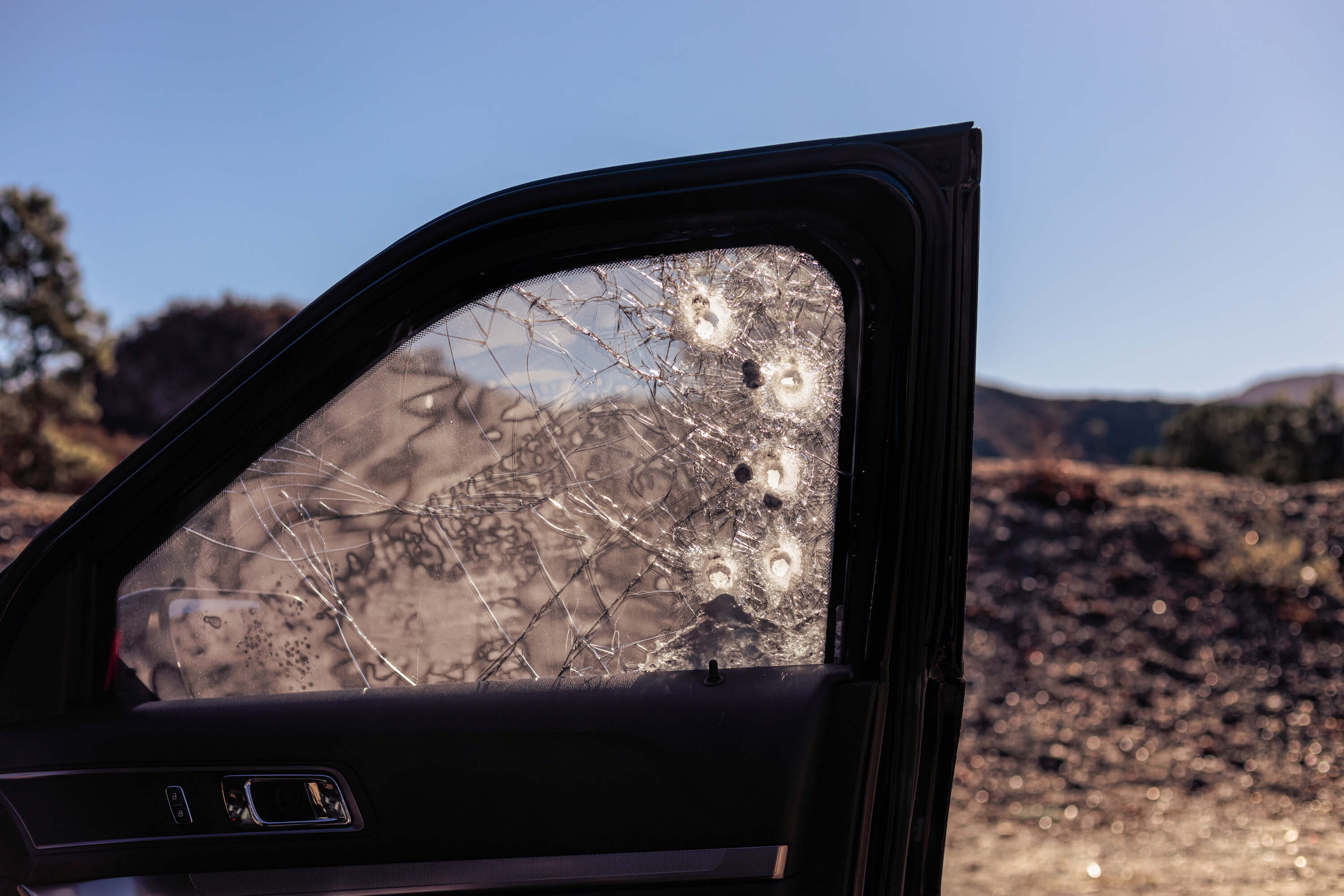
- Some manufacturers have taken the extra step of conducting Special Threat testing on their ballistic windshields against rifle rounds. Unlike standard laboratory testing, these evaluations are performed with the windshield installed at its actual vehicle angle. This better replicates real-world conditions, where the slope of the glass can increase ballistic performance by promoting bullet deflection. In live-fire demonstrations, these windshields have consistently performed well beyond their NIJ Level IIIA handgun rating.
- Ballistic glass stops a bullet by pairing a hard outer layer that deforms and slows the round with a tough inner layer, usually polycarbonate, that absorbs what energy is left.
- One-way "return-fire" glass uses an intentionally asymmetric layer design so officers can fire outward while staying protected from incoming rounds.
- Ballistic window film is not the same product as certified ballistic glass and carries no NIJ or UL 752 rating.
- Before buying or specifying vehicle armor, ask for the exact threat level, the independent testing lab, and whether the rating covers the full installed system: glass, frame, and door together.
- In addition to a live fire demonstration or trusted video representation, firsthand visual inspection of the glass installed in a vehicle is critical. Optical clarity is of utmost importance for glass, especially windshields, being installed in vehicles that will be driven daily, during long shifts, and in all lighting conditions.
What Does "Bulletproof" Actually Mean?
"Bulletproof" is a consumer word, not an engineering one. It implies a material that stops any bullet, from any weapon, fired any number of times, indefinitely. No glass, ceramic, metal, or composite on the market actually does that.
Every ballistic material, glass included, is tested and rated against a defined set of threats: specific calibers, bullet weights, velocities, and a specific number of hits. Change any one of those variables enough, and even top-rated glass can fail.
That's why the people who design, test, and certify this equipment don't use the word "bulletproof." They use "ballistic," "bullet-resistant," or "transparent armor," because those terms describe what a product is rated to do, rather than making a promise it can't keep.
This distinction sounds like semantics until you're the one making a purchasing decision for a patrol fleet. An agency that assumes its glass is "bulletproof" against everything may unknowingly leave officers exposed to threats, like rifle rounds, that the glass was never designed to stop.
Are Police Vehicle Windows Really Bulletproof?
No. Ballistic glass withstands unlimited hits at any caliber forever. "Bulletproof" is marketing language; real protection is always threat-specific and independently tested.
Bulletproof vs. Bullet-Resistant: What's the Real Difference?
People use "bulletproof" and "bullet-resistant" interchangeably, but only one of those terms holds up technically.
Manufacturers, testing labs, and government agencies use "bullet-resistant" or "ballistic" in their official documentation. If a product is marketed purely as "bulletproof," with no rating, no named testing lab, and no defined threat level, that's worth a second look before you trust it with someone's life.
How Does Ballistic Glass Stop a Bullet?
Ballistic glass isn't a single sheet of super-strong material. It's a laminate, built from alternating layers of glass and a tough polymer, usually polycarbonate. Each layer plays a different role in bringing a bullet to a stop:
- The bullet strikes the hard outer layer. Glass or acrylic on the impact side flattens and deforms the bullet on contact, spreading its energy over a wider area instead of a single point.
- The energy disperses through the laminate. The layers are bonded together, often under heat and pressure, so the impact spreads sideways through the material rather than punching straight through.
- The polycarbonate layer absorbs what's left. This tougher, more flexible layer stretches and drags at the now-slowed, flattened bullet, converting its remaining energy into heat and material deformation.
- The bullet stops before reaching the protected side, assuming the round, caliber, and hit count fall within the glass's tested rating.
If the threat exceeds the glass's rating (a rifle round hitting handgun-rated glass, for instance, or a later shot hitting glass rated for fewer hits), the same layered design that stops lower threats can fail.
Understanding Ballistic Glass Ratings: NIJ and UL 752
Two rating systems come up constantly in ballistic glass conversations: NIJ and UL 752. They're related, but not interchangeable, and knowing which one applies to your situation matters.
NIJ Protection Levels
The National Institute of Justice (NIJ) sets ballistic resistance standards originally developed for body armor. Because agencies already know these levels from their vests, the same "Level" naming is often carried over to describe vehicle glass and other rigid armor.
NIJ is in the process of renaming these threat levels (IIIA is becoming "HG2" under the newer 0101.07 standard), but "Level IIIA" is still the term used across the vehicle glass industry today, so that's the language this guide uses.
The important takeaway: Level IIIA, the rating you'll see most often on patrol vehicle glass, is a handgun rating. It does not stop rifle rounds. If an agency's threat assessment includes rifle-caliber weapons, the proposed windshield glass should be range tested against those calibers. If 360-degree rifle-rated protection is needed for specialized vehicles, the agency will need to specify Level III or IV protection, which is a heavier, thicker, and more expensive category of product often requiring extensive vehicle modification.
UL 752 Ratings
UL 752, the Underwriters Laboratories Standard for Bullet-Resisting Equipment, is the standard most often applied to architectural glazing: bank teller windows, security booths, storefronts, and similar fixed installations.
One quirk worth knowing: UL 752 levels aren't a straight ascending scale after Level 3. Level 6, for example, is built to stop repeated 9mm submachine gun fire rather than a rifle round, so it's actually lighter than Levels 4 and 5. Each level describes a specific tested threat, not simply "more protection" as the number climbs.
Which Standard Applies to Police Vehicle Glass?
In practice, most vehicle-mounted ballistic glass, including windshields and side glass, is rated using NIJ-style "Level" terminology rather than UL 752 numbering, since it lets agencies compare vehicle glass directly to the body armor ratings their officers already wear.
Whichever system a product uses, ask for the same three things: the specific level, the ammunition types tested, and the name of the independent lab that certified it.
How One-Way "Return-Fire" Glass Works
Standard ballistic glass is built to stop bullets from either direction. One-way glass, sometimes called "return-fire" glass, is deliberately asymmetric, and that asymmetry is the whole point.
The construction places a hard, rigid layer (glass or acrylic) on the threat-facing side, with a softer, flexible layer (polycarbonate) on the protected side.
- Incoming fire: A bullet hits the hard outer layer first. That impact flattens and slows the bullet, spreading its energy over a wider area before it ever reaches the polycarbonate, which then absorbs what's left and stops it.
- Outgoing fire: Fired from inside, the round meets the flexible polycarbonate layer first. Because that layer doesn't deform the bullet the way the rigid outer layer does, the round stays largely intact and continues through, breaking out through the brittle layer from the back side.
This is why an officer can fire out through the same glass that just stopped an incoming round.
The layers simply respond differently to impact from each direction. It's precise material engineering, not a one-way-mirror trick.
Why Dana Safety Supply Is the Trusted Resource for Ballistic Glass
Vehicle-mounted ballistic glass has become a practical complement to body armor, not a replacement for it. Unfortunately Officers aren't always wearing a vest or may be parked, completing necessary reporting tasks; an armored vehicle's glass and door panels provide passive protection during exactly those unguarded moments.
As the nation's largest public safety equipment supplier and emergency vehicle upfitter, Dana Safety Supply built its approach to ballistic glass around the same standard this whole guide is built on: never oversell what a product can do.
A complete vehicle armoring package typically includes:
- Windshields: usually a two-way (stops rounds from entering, and also prevents officers from firing through) Level IIIA laminate that looks and installs like OEM glass with minor modifications, protecting against threats from the front.
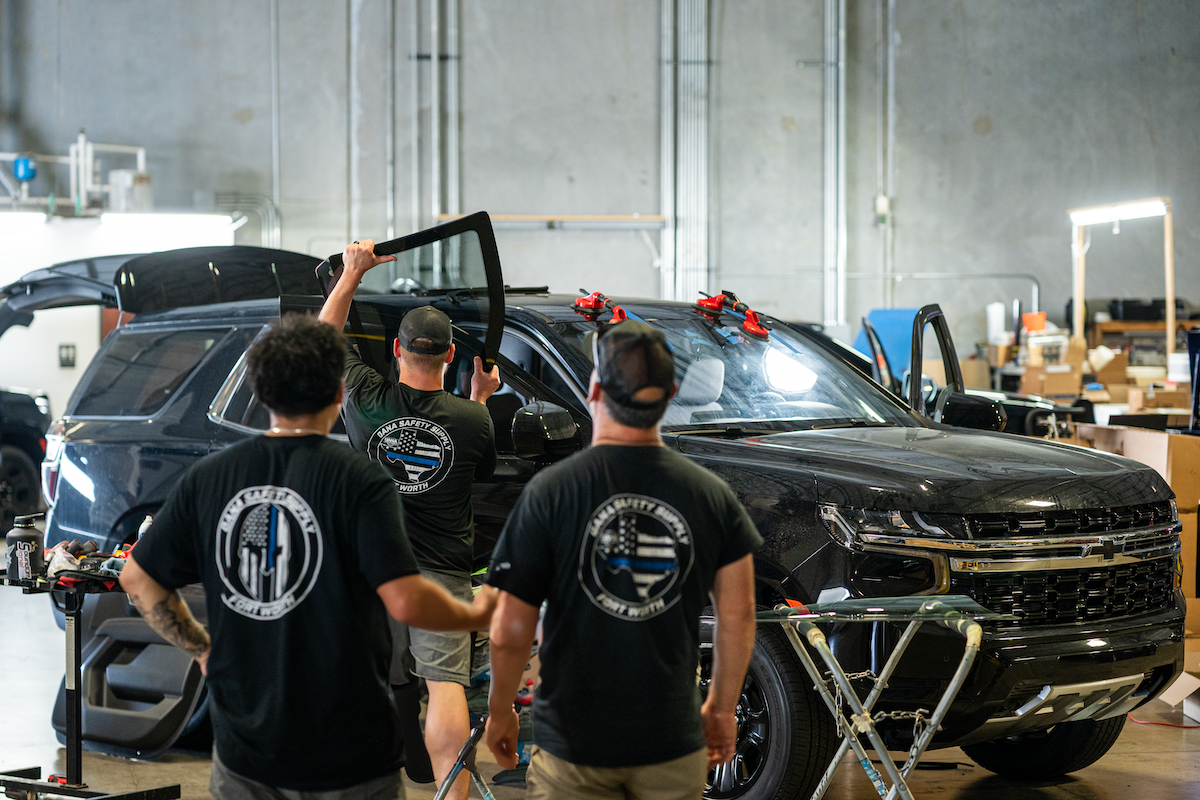
- Side glass: often one-way, return-fire-capable glass that still rolls up and down like a factory window while protecting against threats from the side. These also require some minor vehicle modification due to the thickness of the glass.
- Door panels: which extend that same protection level to the door itself, turning the full door into a shield an officer can use for cover.
- Minimal increase in total weight of the vehicle. A full package including the windshield, side glass (2) and door panels (2) should add approximately 200 pounds of balanced weight.
Our BallisTech® line is built around exactly this system: Level IIIA windshields, one-way side glass, and door panels engineered to fit specific police package vehicles with minimal modification, and designed to move from unit to unit if a vehicle is ever decommissioned. It's available exclusively through Dana Safety Supply and installed by EVT-certified technicians.
None of it is marketed as "bulletproof." It's rated, tested, Level IIIA protection, which is precisely why agencies treat Dana Safety Supply as their resource for ballistic glass, not just another supplier on a bid list.
How to Evaluate Ballistic Glass Ratings Before You Buy
Before specifying or purchasing ballistic glass for a fleet, confirm the following:
- The exact threat level: NIJ IIIA, III, IV, or a specific UL 752 level, not just the word "bulletproof" or "ballistic" on its own.
- The ammunition tested, so you know exactly what threats the rating covers.
- The independent testing lab that certified the product. Legitimate ballistic glass is tested by an accredited third party, not just claimed by the manufacturer.
- Whether the rating covers the full system: glass, frame, and door together, since rated glass in an unrated frame doesn't perform as a rated assembly.
- Fit and installation requirements for your specific vehicle platform, and whether the glass is OEM-fit or requires structural modification.
- Whether the components transfer between vehicles if a unit is decommissioned or reassigned.
- The warranty the manufacturer offers against glass “delamination”, causing the glass to be hazed, or opaque.
- The warranty the Upfitter offers against window leakage, or any other upfitting defects.
Common Misconceptions About "Bulletproof" Glass
- "It stops every bullet." It stops the specific threats it's rated and tested for, nothing more.
- "Higher UL 752 numbers always mean more protection for my situation." The levels describe specific threats, not a simple best-to-worst ranking. Level 6 is actually lighter than Levels 4 and 5 because it's built for a different threat type.
- "Ballistic window film is the same as ballistic glass." Film can reduce shattering from low-level impacts, but it isn't tested or rated under NIJ or UL 752 standards and shouldn't be treated as bullet-resistant.
- "Once it's rated, it's rated forever." Age, UV exposure, repeated impacts, improper maintenance or cleaning, and improper installation can all affect real-world performance over time, which is why periodic inspection is worth building into a fleet's maintenance schedule.
- "One-way glass works like a one-way mirror." It has nothing to do with light or visibility. It's about how differently the layered materials respond to impact from each direction.
Conclusion
"Bulletproof" is a word built for movie posters, not procurement decisions. Real ballistic glass, whether it's protecting a bank teller, an embassy, or a patrol vehicle, is rated to defeat specific, tested threats, not everything that could ever be fired at it.
For law enforcement agencies, that distinction has real consequences. NIJ Level IIIA glass, the rating used on most patrol vehicles, is excellent, genuinely life-saving protection against handgun threats. It is not rifle protection, and no honest supplier will tell you otherwise.
If your agency is comparing vehicle armoring options, start with three questions: What threat level is this actually rated for? Who tested it? And does that rating cover the whole installed system, not just the glass?
At Dana Safety Supply, we can walk you through all three, because BallisTech ® is exclusive to us and installed through our nationwide network of EVT-certified technicians. That's the difference between being a supplier and being a resource.
To see how Level IIIA windshields, one-way return-fire side glass, and door panels come together in a single system, take a look at BallisTech™, or call our team directly at 1-800-847-8762 for a fleet-specific quote.
Frequently Asked Questions
Is bulletproof glass actually bulletproof?
No. All ballistic glass is rated to stop specific threats: defined calibers, velocities, and hit counts, not every possible bullet. "Bullet-resistant" or "ballistic glass" is the accurate term, and any legitimate product should come with a stated threat level and testing certification.
What's the difference between bulletproof glass and bullet-resistant glass?
They usually describe the same physical product. "Bulletproof" is the informal, consumer-facing term; "bullet-resistant" and "ballistic glass" are the accurate industry terms, since they reflect that protection is always tested against specific, defined threats rather than absolute.
What NIJ level is used for police vehicle glass?
Most patrol vehicle windshields and side glass use NIJ Level IIIA, the highest level of handgun protection. It stops rounds up to .44 Magnum but does not stop rifle rounds with the exception of special threat-tested windshields, which require Level III or IV protection instead.
Can ballistic glass stop a rifle round?
Only if it's rated for it. Standard Level IIIA vehicle glass is built for handgun threats. Stopping rifle rounds requires a heavier, thicker Level III or IV product, which is far less common in standard patrol vehicle glass because of the added weight and cost. The exception to this would be special threat-tested windshields that have gone through independent certification at actual vehicle-installed angles, many of which stop numerous calibers and rifle round impacts.
Does ballistic glass wear out or need to be replaced?
Ballistic glass is durable, but not indefinite. Impacts it successfully stops, long-term UV exposure, and physical damage can all affect performance over time, so it is imperative that a fleet department put a periodic inspection program in place, as well as instruct officers on the correct daily cleaning and maintenance of the glass.